
Outdoor Experiences
Retreats
Weddings

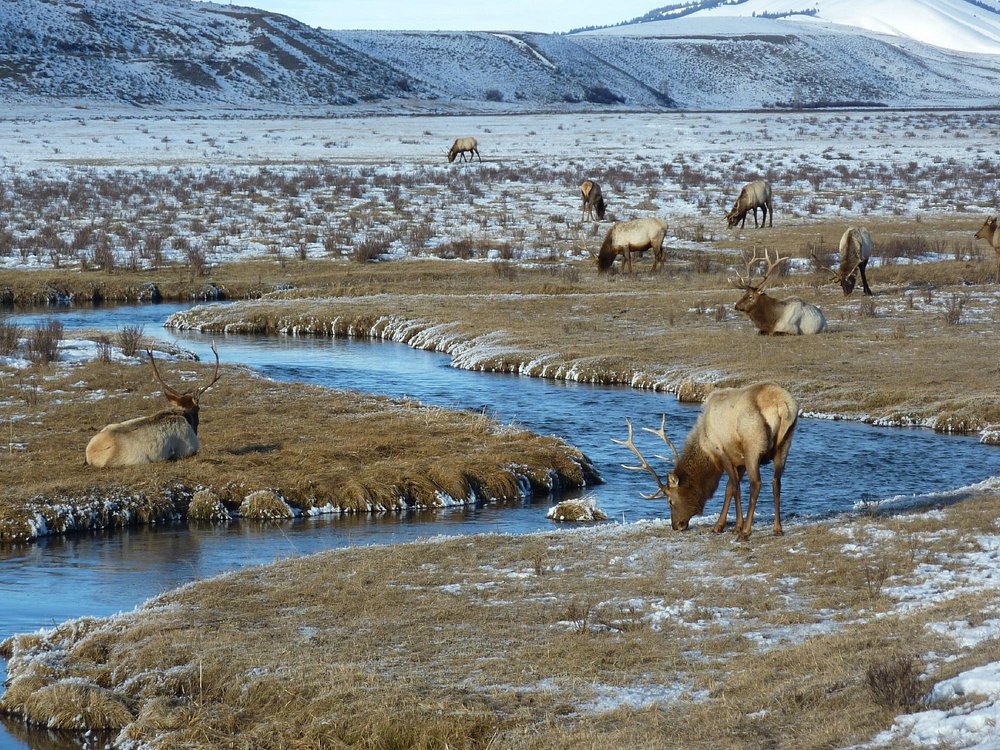
From December through March, the National Elk Refuge at Jackson Hole, Wyoming, is home to roughly 8,000 of these majestic animals. Consisting of over 24,700 acres of grassland, herds of elk seek sanctuary from the harsh winter conditions at higher elevations by migrating to the valley of Jackson Hole. But there’s more to this conservation area than just elk. Here’s the lowdown on one of Wyoming’s most unforgettable wildlife experiences.

The National Elk Refuge in Jackson Hole, Wyoming, exists as a direct response to humanity’s impact on the environment. In the late 19th century, settlers founded the town of Jackson, WY, and began doing what settlers do. They built homes and buildings, turned the land into farms and ranches, and started turning what was once unspoiled wilderness into a place to raise their families.
Except there was a problem. You see, elk and other migratory herd animals have what are called ranges, referring to the regions they inhabit at different times of year. Elk favor winter ranges that are sheltered from the weather and see less snowfall than the surrounding areas. Unfortunately for them, those are the same criteria many settlers use when staking out land. Suddenly, the elk herd found its traditional migration routes blocked by human development, and ecological chaos ensued.
Anatomically speaking, elk aren’t that different from cattle, which is a problem. You see, unlike birds, elk don’t have an internal compass that guides them to their winter ranges. Instead, they rely on environmental cues, following food sources and avoiding deep snow and dangerous weather conditions. So, naturally, they’re drawn to the lush grazing pastures of Jackson Hole. The same pastures that settlers had fenced off and used to raise their livestock. Unable to navigate the maze of fencing, elk became trapped in the snow during a few particularly hard winters and would eventually starve. A few settlers took pity on the creatures and began sharing their livestock feed with the herd, even raising money to purchase additional hay, but the situation was grim.
However, the early 1900s also marked the birth of the early conservation movement. President Theodore Roosevelt had pushed for legislation to protect dwindling wildlife populations, establishing the first federally protected wildlife refuges in the country. In Wyoming, local rancher Stephen Nelson Leek was a fierce advocate for the conservation of elk.
Stephen Leek wasn’t being entirely selfless. In addition to being a farmer and rancher, he was also an outfitter, AKA a hunting guide for wealthy tourists from out east. As his ranch was in the center of the Elk’s winter range, he had a front row seat to the devastation and began to worry both for the future of the herd and his future as an outfitter.
In a coincidence that may have ultimately saved the Jackson herd, one of Leek’s most frequent clients was George Eastman, founder of Eastman Kodak and the man credited with making photography accessible to the average person. Eastman gifted Leek a camera, which Leek quickly incorporated into his outfitting business.
So when the elk population began to die on his doorstep, Leek pulled out his camera and began documenting their ordeal. He published his work in outdoor journals across the country, and he campaigned relentlessly to draw attention to what was becoming known as the ‘elk problem’ in Jackson Hole. Eventually, due in no small part to his advocacy, the Wyoming legislature would combine a parcel of public and purchased land into what is now known as the National Elk Refuge in Jackson Hole, WY, earning Leek the moniker “Father of the Elk” for his efforts.
Today, the National Elk Refuge in Jackson Hole is a prime site for conservationists and outdoor enthusiasts, offering a range of activities year-round. So if you’re planning a Jackson Hole getaway, here’s what to expect during your trip to the refuge.
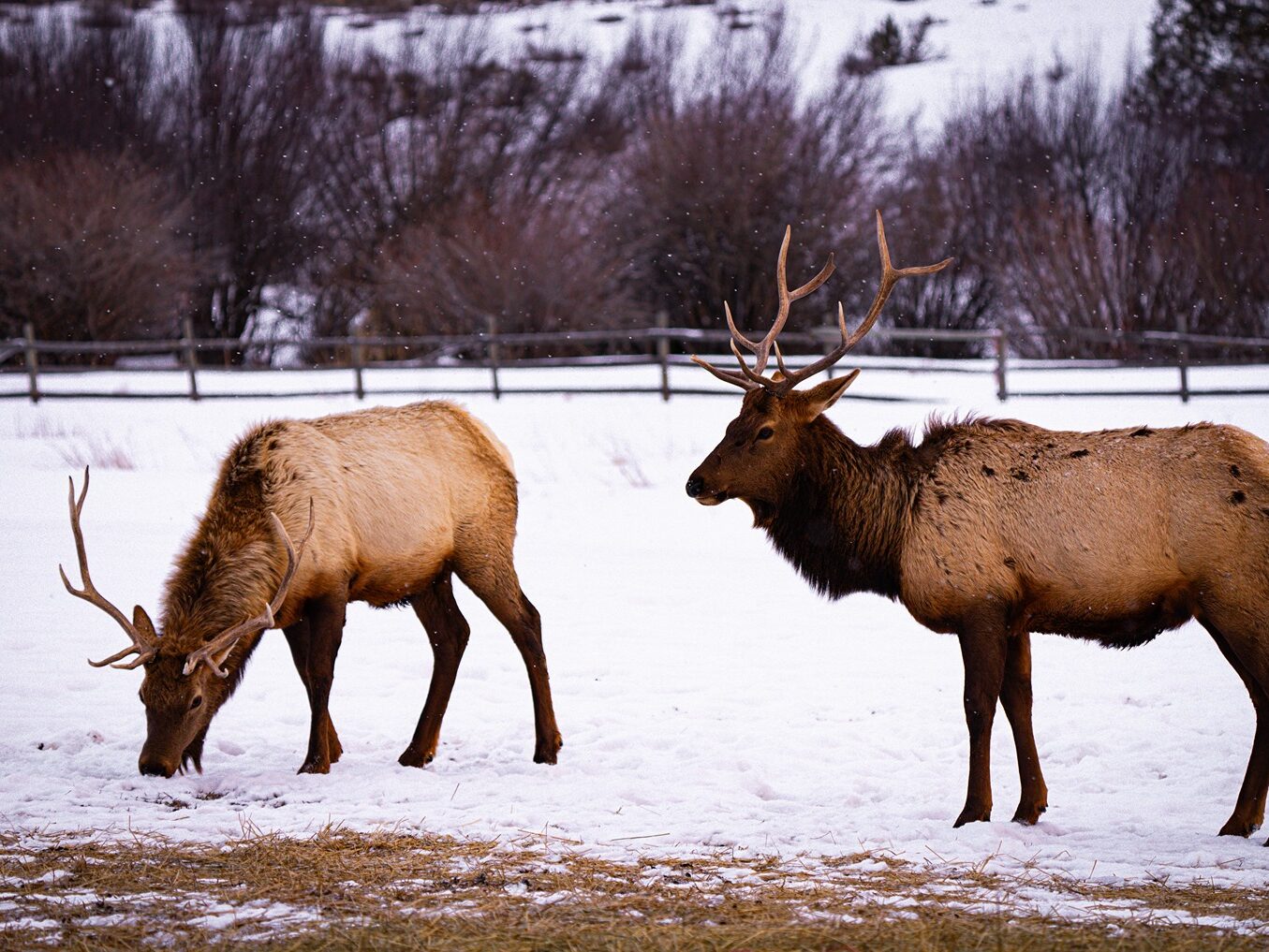
If you’re going to the National Elk Refuge to see elk, you’ll want to plan your visit during the winter months. Elk begin migrating from their summer ranges in mid-November, so you aren’t likely to see them during warmer months. However, from mid-November to early April, the refuge is home to thousands of grazing elk and other wintering wildlife.
There are two main ways to go elkspotting. The first way is free, provided you have access to a car. The Refuge Road is the main thoroughfare through the reserve, providing unobstructed views of the herd as you pass through the refuge. There are pull-off points along the highway so you can safely stop and take pictures. Just be sure to respect the elk’s space!
Don’t expect to get direct access to the elk, however. Much of the Refuge is closed to humans during the winter, as human disruption can have a detrimental impact on the health of the herd. For activities like hiking or cross-country skiing, you should look to the nearby Grand Teton and Yellowstone National Parks.
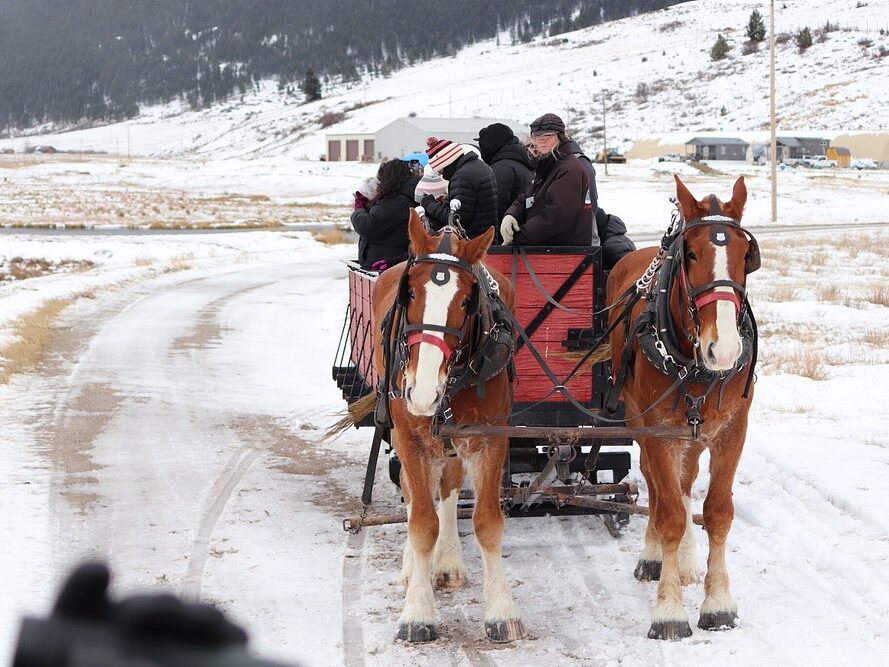
One of the best ways to get up close with the wildlife is by taking a horse-drawn sleigh ride. National Elk Refuge sleigh rides get you up close and personal with the elk herd. This is a guided tour through parts of the refuge that you usually can’t access on foot. This is one of the best ways to experience the Refuge, though it does get quite cold, so dress appropriately and pack a blanket.
Just as elk rely on the refuge for food, wolf packs depend on the Jackson herd. Wolves aren’t as easy to spot as there are only a few dozen of them. However, they are present, and conservationists track the packs in an almost tabloidesque manner. Every time a new pack forms, either in the Refuge or in nearby Grand Teton National Park, it’s big news.
Sometime around the 1950s, North American Gray Wolf populations had been decimated. After all, wolves were inconvenient to hunters and farmers, endangering livestock and competing with hunters for prey. Reducing populations was seen as a good thing for a time, at least until those pesky consequences popped up again.
Wolves are a major limiting factor on elk populations, so herds exploded in size without wolves to hunt them. This might seem like a conservation win at first, until you realize that an oversized population displaces other wildlife by outcompeting them for food and space. So, ironically, the removal of wolves actually led to more elk dying. In 1995, gray wolves were released into the Greater Yellowstone area, and their descendants live in the Refuge today.
Other animals you can find in the refuge include bald eagles, coyotes, and the ermine weasel. While you’re on Refuge Road, you might also encounter another of the National Elk Refuge’s winter inhabitants: bighorn sheep. The bighorns like to get close to humans, and might even try to lick the salt off your car. While this is adorable, it’s not good for the sheep or your vehicle. Be sure to be responsible during your visit!
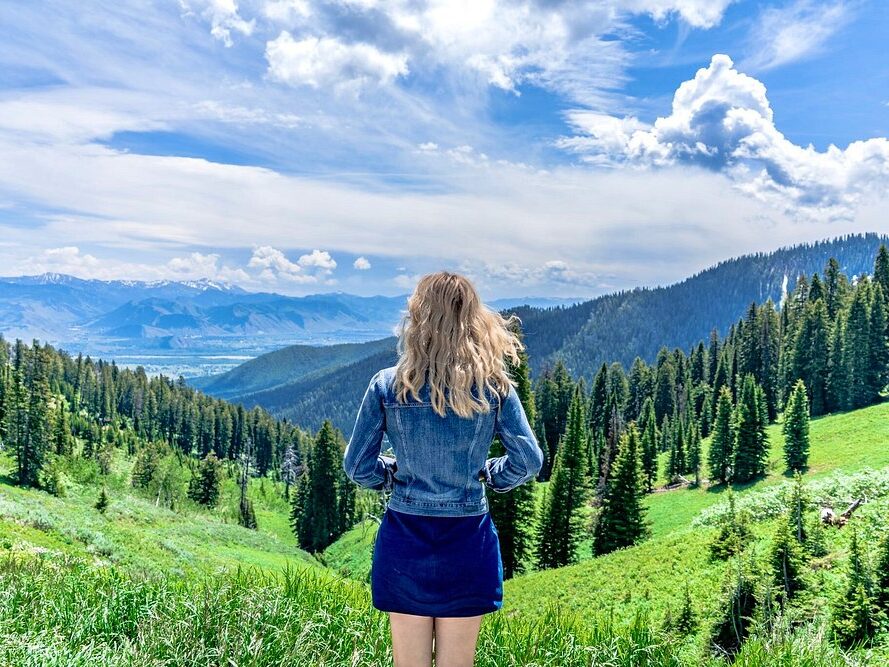
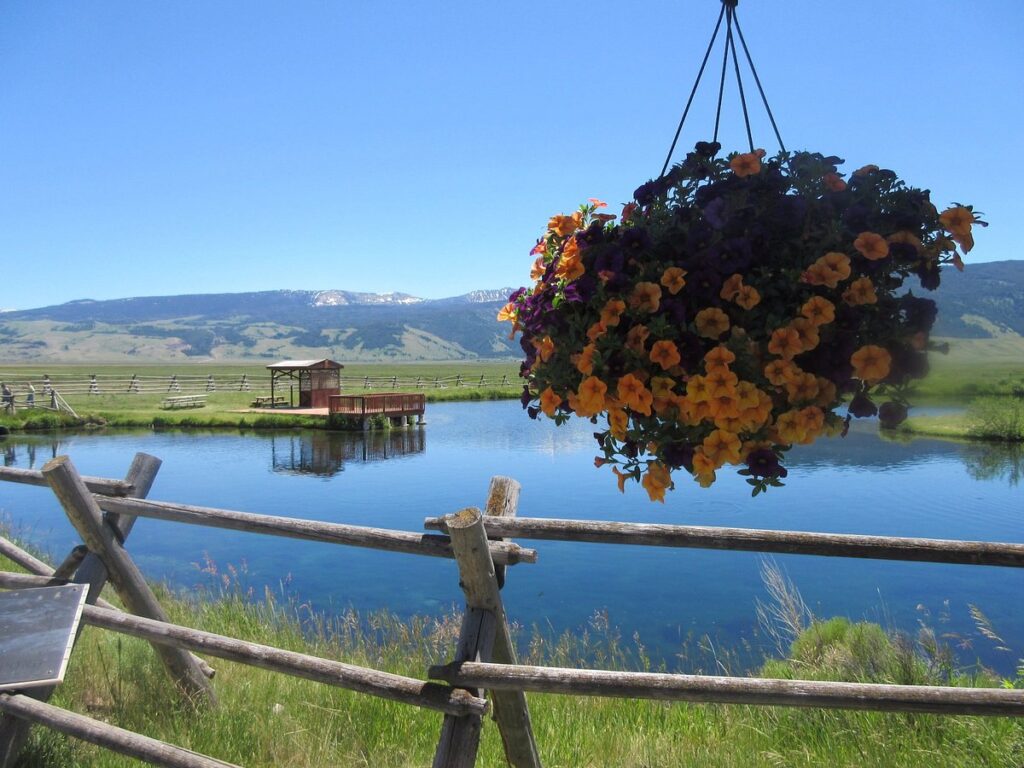
During the summer, you aren’t likely to find any elk at the National Elk Refuge in Jackson Hole, WY. Don’t worry, though! There’s still plenty to do here. In fact, you’ll have much more access to the refuge while the elk are off at the summer ranges.
The trail at the National Elk Refuge is open May through October and stretches nearly six miles long. It’s fully paved and makes for a relatively easy hike. The trail allows you to see many of the Refuge’s summer residents up close. It also links to similar paths at Grand Teton National Park, making it perfect for long bike rides.
The Refuge is a prime spot for fishing during the summer, with Flat Creek, Nowlin Creek, and the Gros Ventre River attracting anglers all season long. The most famous inhabitant of these waters is the cutthroat trout, the official state fish of Wyoming. Don’t let the scary name put you off. These trout are named for the distinctive red coloring on the underside of their jaws, rather than for any ruthlessness. You can see these beautiful fish up close at the Jackson National Fish Hatchery, which is also open to limited fishing.
Fishing seasons at the refuge are staggered, with opening dates ranging from April through August. In addition, the Refuge only allows fishing in select areas. Check for posted signs before you go, and be sure to have your fishing license ready. If you want to admire the wildlife, the waters of Jackson Hole are also home to ducks, river otters, and other aquatic and semi-aquatic life.
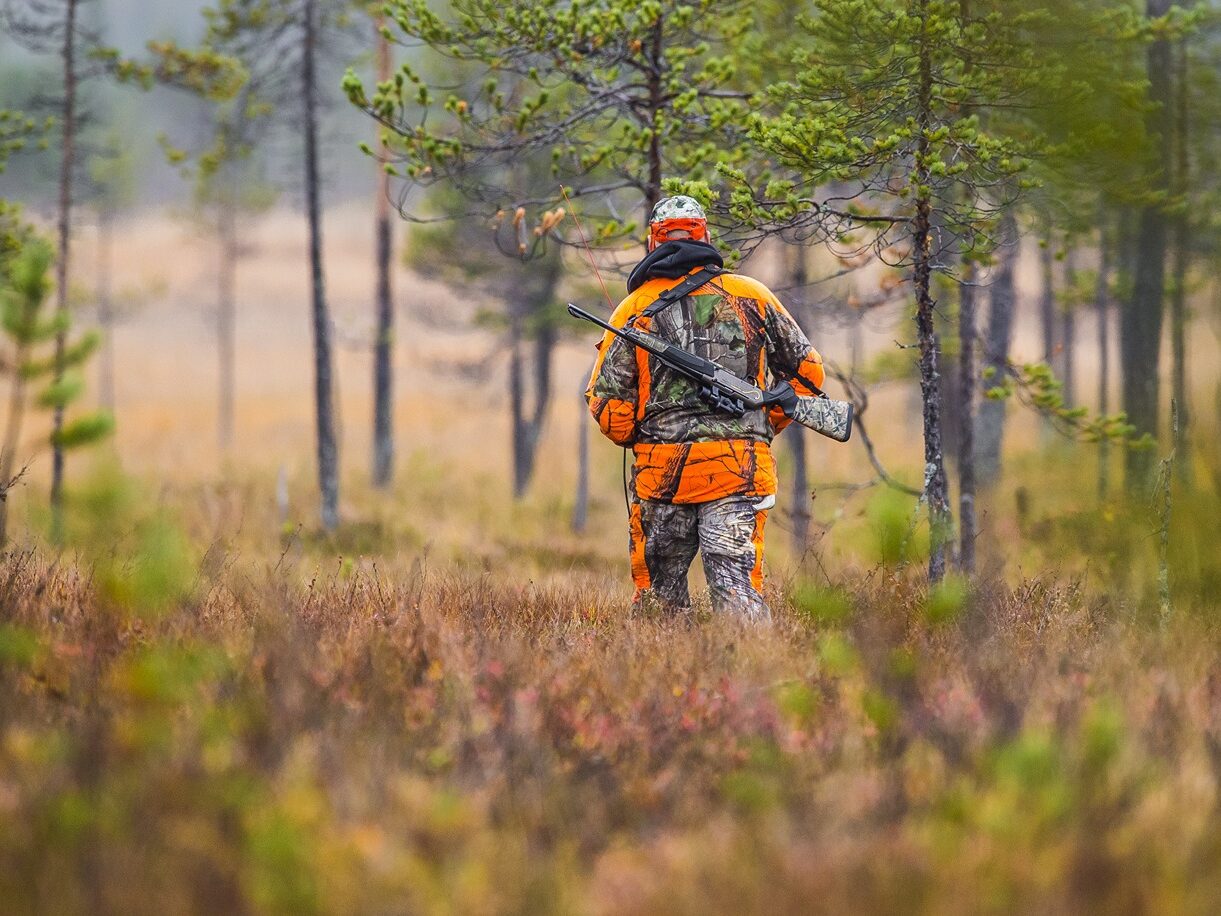
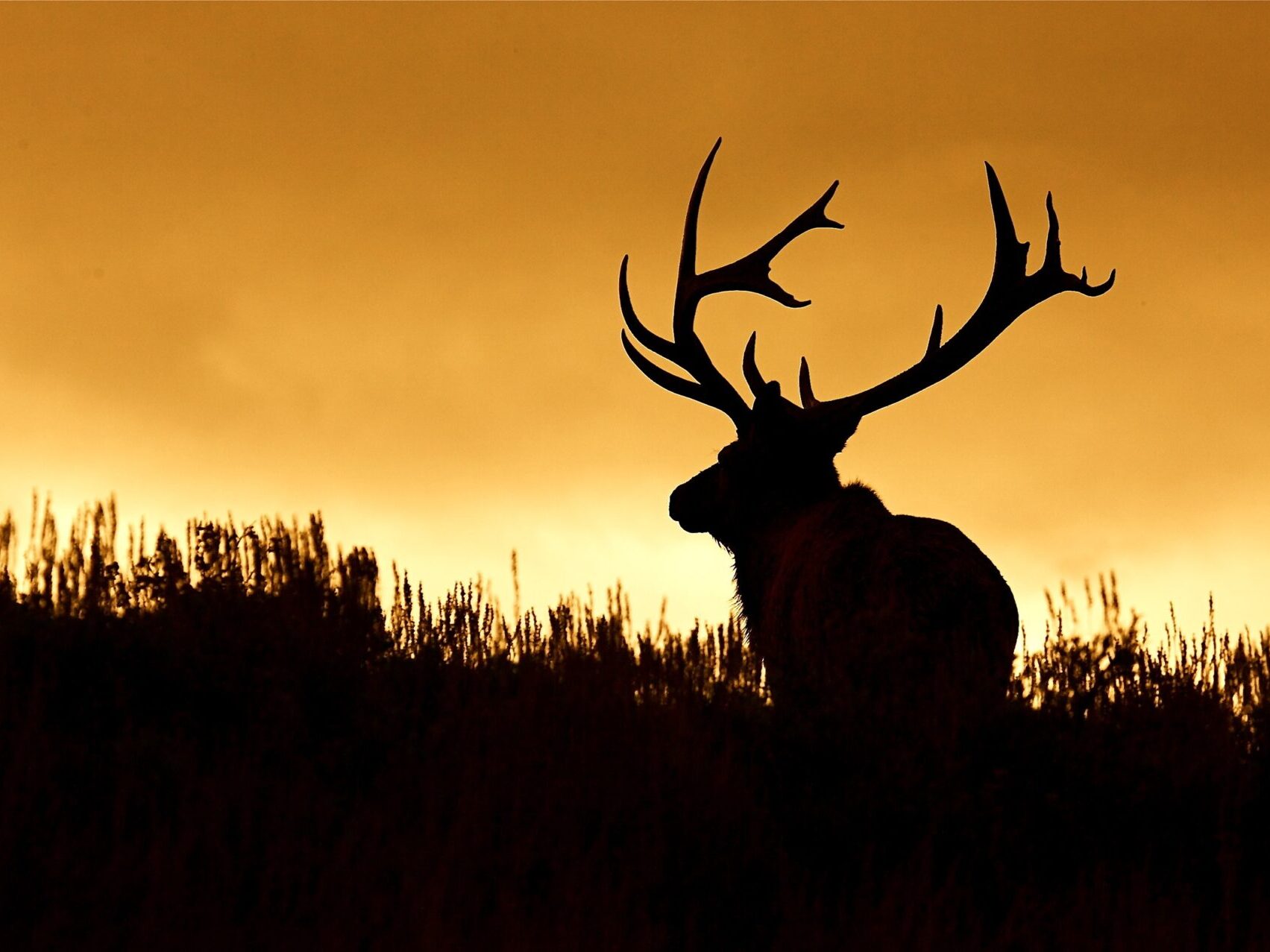
Yes! This might be surprising to some readers, but hunting and conservation go hand in hand. Recreational hunters are among the most prominent advocates for wildlife protection and play an essential role in keeping the refuge operational. Highly regulated hunting also helps keep wildlife populations under control: population explosions may seem like a good thing at first, but often lead to mass die-offs due to resource shortages. Keeping populations in check ensures that the herd can survive for generations to come.
Still, you can’t just roll up to the refuge and start shooting. You need a Wyoming hunting license and a permit first. Currently, permits are available for three species: elk, bison, and white-tailed deer. There are strict regulations on when, where, and how you can hunt in order to protect the wildlife, so familiarize yourself with the rules before applying for a permit.
The National Elk Refuge in Jackson Hole, Wyoming is just one of many attractions that Jackson has to offer. However, you’ll need a place to rest between your adventures. So if you’re looking for a place to stay that is as unique as Jackson Hole itself, you’ve come to the right place. Here are three picks from our curated collection.

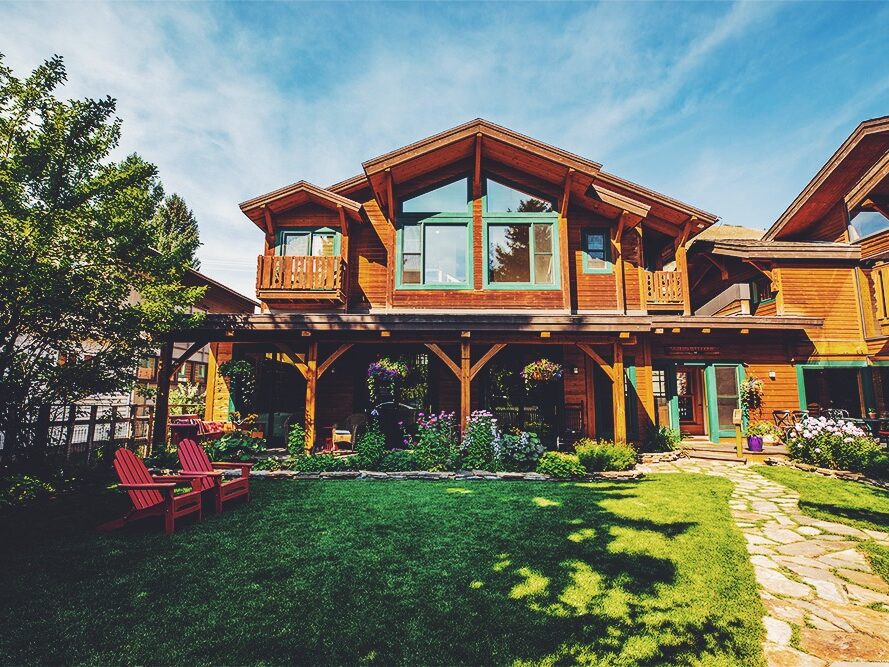
Have you ever been to a ‘luxurious’ hotel that just feels cold? Not necessarily in temperature, but in vibe. The massive hotel lobbies with elegant fixtures look pretty, but they can feel almost forboding. True luxury, in our humble opinion, is tailored to the individual. A place where your needs are anticipated and met with enthusiasm. A place like The Alpine House.
Located in the heart of Jackson and just a short drive from the National Elk Refuge, Alpine House is a rustic, boutique resort with a cabin-inspired exterior. The decor inside is elegant, but in an inviting, homey way. This is a resort that invites you to curl up by the fire with a good book and a cup of hot cocoa. A place where there’s always a warm breakfast waiting when you wake up. Something that is a part of the community, rather than apart from it.
The well-appointed rooms feature Western-style flair and home-like amenities. There are wood-burning fireplaces, bathrooms with deep soaking tubs, and little touches that just add to the overall comfortable atmosphere. Outside your room, you can find all-day coffee, tea, and cocoa service, made-to-order breakfasts, and a library of books and games.
Beyond the hotel, you can explore the town of Jackson on a complimentary bike. It’s a great way to explore Jackson’s shops, bars, and restaurants. If you want a different sort of workout, The Alpine House also offers free guest passes to the Teton County & Jackson Community Recreation Center. There, you can access a fitness center, an indoor aquatics center, or a full rock climbing gym!

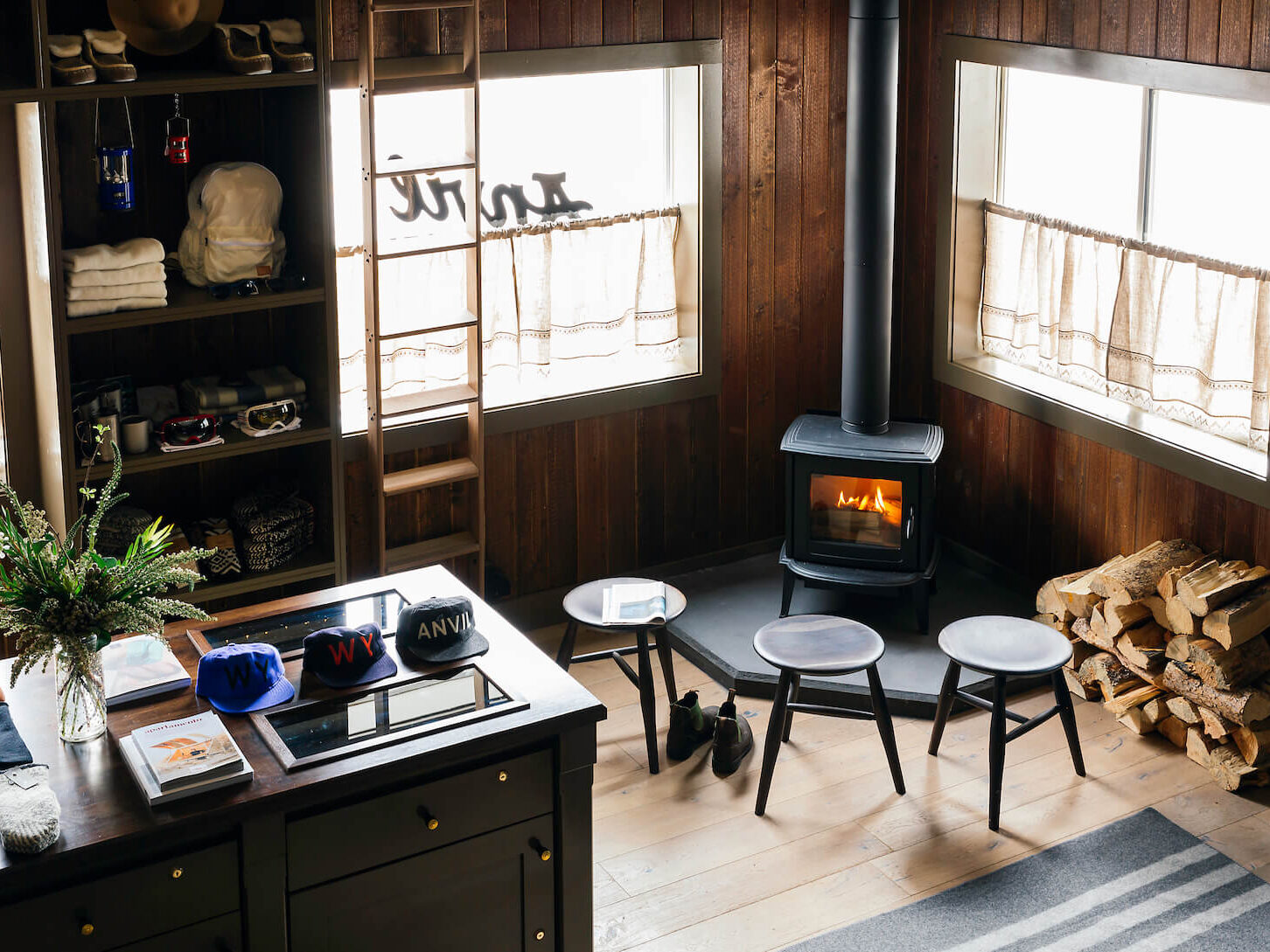
Just four minutes away from The Alpine House is its sister property, the Anvil Hotel. This elegant hotel is inspired by Shaker architecture, emphasizing simplicity and utility. There’s a minimalist vibe to the whole place, from the cast-iron fireplace in the lobby to the simple colors in each room.
The amenities here are similar to those at The Alpine House: complimentary coffee, complimentary bikes, and a curated library of books and board games. You can even walk over to The Alpine House for a complimentary breakfast before heading to the National Elk Refuge.
Rooms at the Anvil feature custom fixtures and furnishings, including a curated mini bar. Even the blankets are custom-made for the hotel, creating a truly bespoke feeling. However, if you’re travelling alone or in a small group and want to save a bit of money, you can stay at Cache House. This hostel, attached to the Anvil Hotel, includes many of the same amenities as Anvil House. Guests stay in bunk beds with privacy curtains and a shared bathroom.
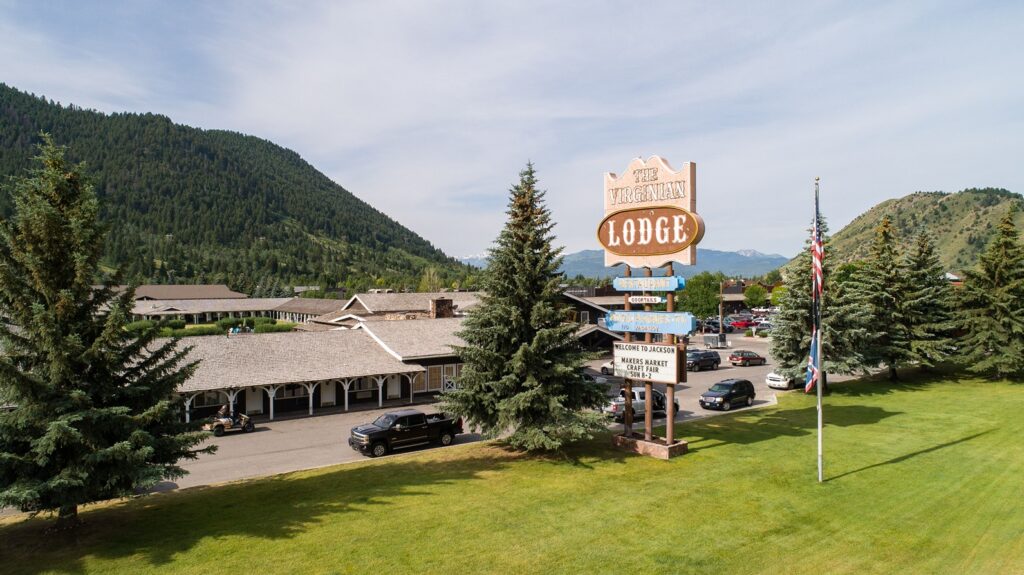
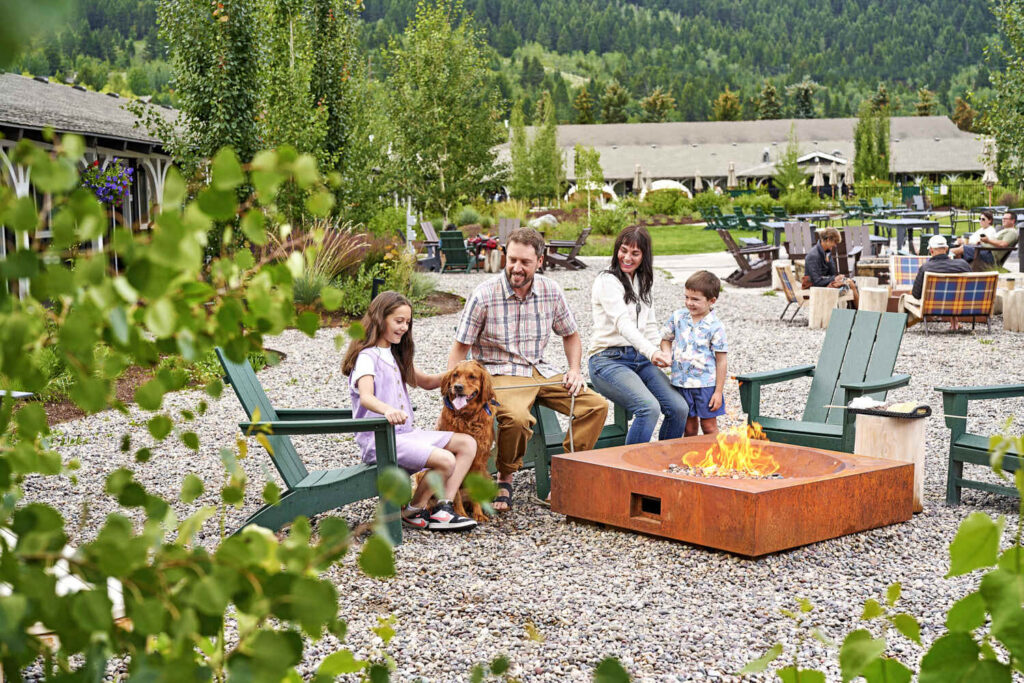
The Virginian Lodge offers a more traditional resort experience. It is a multi-building complex consisting of suites, restaurants, boutique shops, and a full RV park. The Virginian is a full-service experience: from breakfast at the on-site restaurant, a morning at the National Elk Refuge, an afternoon by the pool, or evenings under the Wyoming stars, you can find comfort and luxury here at any time of day.
The rooms are inspired by retro, motor lodge decor, with wood-panelled walls and mid-century modern furniture. You can relax in more traditional suites with plush beds and seating areas, or try bunking in the Adventure Camp suite, featuring two twin bunk beds. The latter connects to their king-sized suite, making it perfect for family trips.

Hotels aren’t just about shelter. They’re as much a part of your vacation as the destination. So don’t pair an incredible experience with a so-so hotel. Browse our curated collection of boutique hotels and resorts, and find the perfect base for your next adventure.